
Theelogy
“The gay women’s bar then was perhaps a God-less place but not necessarily a god-less place.”
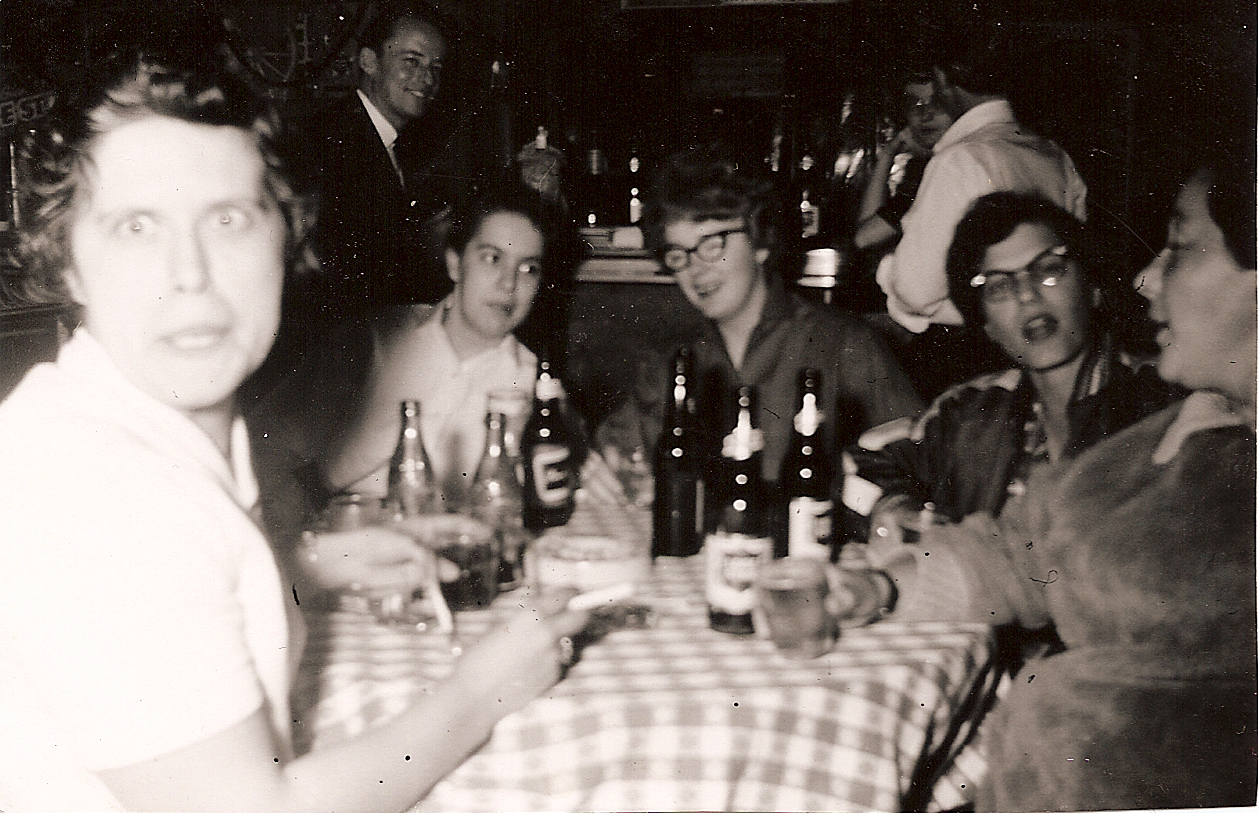
One of the central theoretical contributions of Baby, You Are My Religion is Marie Cartier’s formulation of theelogy, a term she develops to describe forms of sacred meaning that emerged within mid-twentieth-century gay women’s bar culture.
The concept begins with a historical problem. The women at the center of the study lived in a period when homosexuality was commonly defined through the languages of sin, pathology, criminality, and social deviance. Religious institutions offered little framework within which these women could understand their lives as spiritually meaningful. Yet their accounts repeatedly describe the bars as places of recognition, belonging, transformation, and survival.
The radical move in theelogy is not simply the claim that bars functioned like churches. It is the suggestion that sacred meaning may be created by people who have been excluded from the institutions authorized to define religion in the first place.
Cartier begins with lived experience rather than doctrine. Drawing on Gordon Kaufman’s theological method, she treats the women’s testimony as a source for theological reflection. The point is not that the women themselves consciously understood what they were doing as theology. In many cases, they did not. Theelogy is a later language for experiences that could not easily be named as religious within their own historical moment.
The concept is shaped most strongly by process theology and liberation theology, and also by feminist, womanist, and queer theological traditions. Process thought contributes an understanding of identity and community as relational and continually becoming. Liberation theology contributes the emphasis on praxis: meaning is enacted through survival, resistance, relationship, and community formation. Feminist theology provides a precedent for taking women’s experience seriously as a source of theological knowledge.
Cartier also draws on Audre Lorde’s critique of “the master’s tools,” questioning whether theological structures that had already defined homosexual women as sinful could adequately contain their experience simply by adding a new adjective to theology. Theelogy therefore creates a different conceptual space, one attentive to the limits of inherited religious language.
At its center is relation. The phrase that gives the book its title, “Baby, you are my religion,” locates sacred meaning in the encounter with another person. Cartier summarizes this movement through four tenants:
To have each other.
To see each other.
To love each other.
To see the other.
Theelogy names the possibility that, within a culture that denied these women religious legitimacy, they nevertheless created forms of recognition, belonging, and meaning that can be understood as sacred.
____
← Back to Baby, You Are My Religion